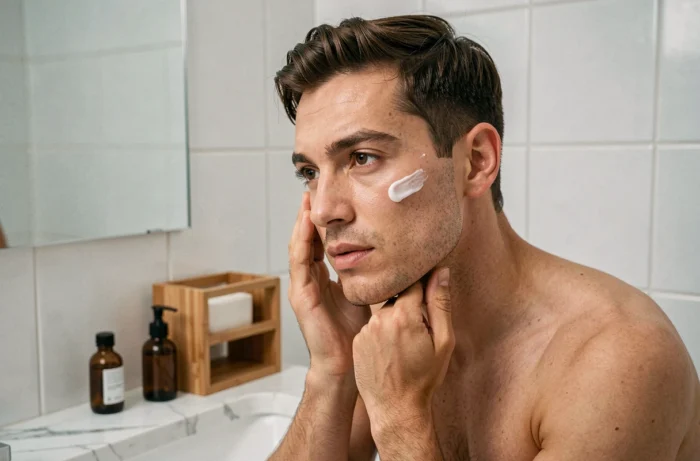
Men’s grooming is no longer just about a shower gel and shaving foam. The market has structured itself around targeted ranges based on skin type, facial area, and specific issues (irregular texture, shine, tightness after shaving). Understanding the logic behind these products allows for the construction of an effective routine without multiplying bottles.
Men’s Skin Barrier: What Changes the Game for Facial Care
Men’s skin is on average thicker than women’s, with a higher sebum production. This characteristic explains why a facial care product formulated for women’s combination skin can leave a greasy film on a man’s face, or conversely, dry out an area already weakened by shaving.
Cleansing is the step that conditions all the following ones. A cleanser that is too stripping disrupts the skin’s pH and prompts the sebaceous glands to overproduce. Gentle formulas, based on non-ionic cleansing agents, better respect this barrier. The choice is made according to skin type: foaming gel for oily skin, milk or cleansing oil for dry skin.
After cleansing, an appropriate moisturizer is sufficient in most cases. Lightweight textures, like gel-cream, are suitable for combination to oily skin. Richer balms target dry or mature skin. To explore ranges specifically designed for these needs, Monsieur Simon’s beauty site offers a selection organized by skin type and usage.
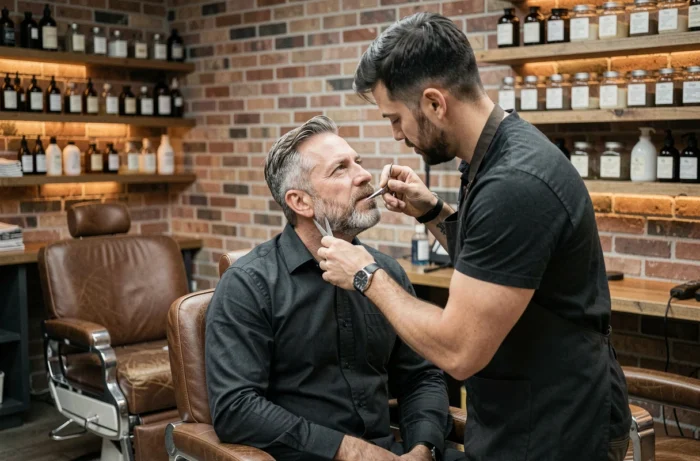
Men’s Shaving Routine: Prepare, Shave, Repair
Shaving remains the main source of skin irritation for men. Ingrown hairs, razor burn, micro-cuts: these discomforts rarely stem from the blade itself, but from insufficient preparation and a lack of post-shave care.
Preparation Before the Blade
Softening the hair before shaving reduces mechanical resistance and limits pulling. Running a warm cloth over the face for a minute opens the pores and softens the hair fiber. A shaving oil applied before the foam or soap creates a protective film between the blade and the epidermis.
Choosing the Shaving Product
Aerosol foams often contain propellant gases and aggressive surfactants. Creams and shaving soaps, whipped with a brush, produce a denser foam that maintains hair hydration throughout the shave. The difference is felt from the first use on sensitive skin.
Post-Shave Care
An alcohol-free aftershave balm soothes irritation without drying out. Formulas containing allantoin or bisabolol calm redness. Applying the balm on damp skin enhances the absorption of active ingredients.
- Avoid lotions containing denatured alcohol, which cause a stinging sensation without real reparative benefits
- Change the blade regularly: a dull blade pulls the hair instead of cutting it cleanly
- Respect the direction of hair growth during the first pass, then go against the grain only if the skin tolerates it
Hair and Beard Care: Adapting Products to Hair Texture
Hair and beard do not have the same structure. Beard hair is thicker, coarser, and grows in an area of the face subjected to daily aggressions (partial shaving, friction from masks or scarves, direct exposure to cold).
Beard oil is not a superfluous cosmetic product. It deeply nourishes the hair and hydrates the underlying skin, which often peels due to a lack of accessible sebum under a dense beard. A few drops are sufficient, applied to slightly damp beard after showering.
For hair, the choice of shampoo depends on the scalp, not the length. An oily scalp requires a purifying shampoo used two to three times a week, not daily. Washing hair every day stimulates sebum production and creates a vicious cycle of overproduction.
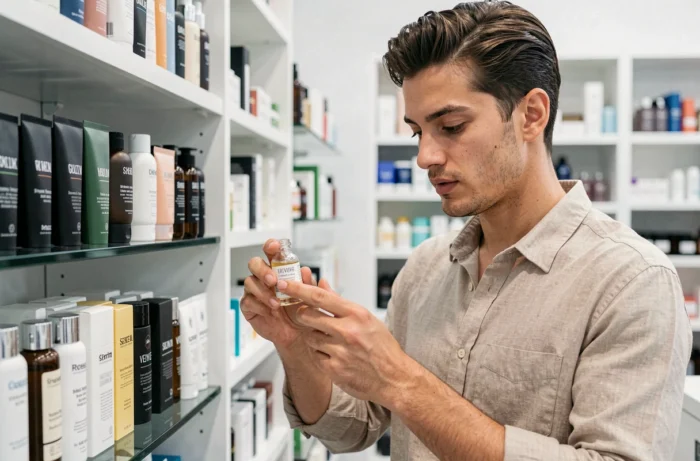
Cosmetic Labeling: New European Rules to Know
A recent regulatory change directly affects men’s grooming products. Since July 31, 2026, the EU requires the individual declaration of an expanded list of fragrance allergens on cosmetic labels. This obligation far exceeds the previous regulatory framework and applies to shower gels, deodorants, aftershaves, and any scented product.
For consumers, this means that INCI lists on bottles will become longer. This is not a sign of product danger, but an increased transparency regarding components that may trigger allergic reactions. Sensitive skin benefits from better readability.
Another deadline to watch: the European directive on the green transition (Empowering Consumers for the Green Transition) will apply to retailers starting September 27, 2026. Vague environmental claims, such as “natural formula” or “eco-friendly” without verifiable justification, will be much more strictly regulated.
- Read the entire INCI list before purchasing a new scented product, especially in case of allergic history
- Beware of “green” claims not accompanied by a recognized certification (Ecocert, Cosmos, Nature & Progrès)
- Prefer brands that publish the complete composition online, not just on the physical packaging
These regulatory developments do not change the daily routine, but they alter the way to read a label. A well-chosen product starts with an understood ingredient list. The coming months will likely see reformulations from some brands to comply with the new requirements, which could change the texture or fragrance of already known products.