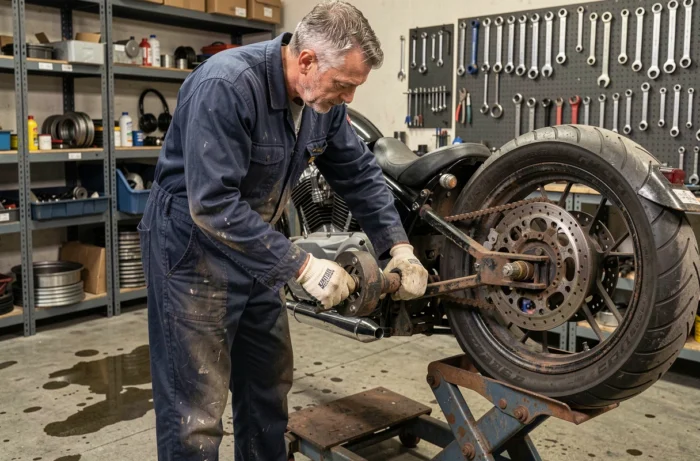
Transforming a motorcycle into a trike represents a project that goes far beyond simply purchasing a kit. Between the cost of parts, labor in a specialized workshop, and the administrative procedures for homologation, the final budget often diverges from the price listed in a catalog. The French regulatory framework imposes a compliance review that generates additional costs, sometimes underestimated at the time of the initial quote.
Technical documentation of the kit: the item that derails the budget
Most motorcyclists interested in conversion compare the prices of kits. An entry-level kit and a high-end custom installation do not fall into the same financial category, but the catalog price only tells part of the story.
The real cost factor lies in the technical documentation provided with the kit. A kit accompanied by a complete file (calculation notes, test reports, component compliance certificates) significantly simplifies the homologation process. Conversely, a kit without usable technical documentation can block registration and steer the file towards a much more expensive individual reception.
Field feedback varies on this point: some workshops include the preparation of the technical file in their service, while others charge for this step separately. Before comparing the costs to transform a motorcycle into a trike, it is essential to check what the quote actually includes regarding paperwork.
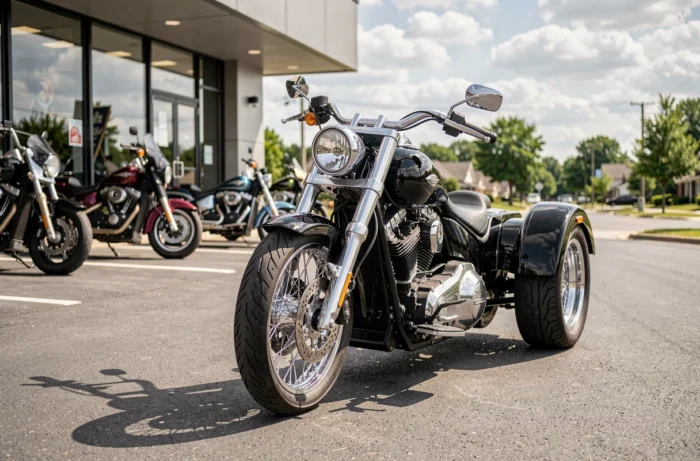
Individual reception (RTI): going through the DREAL and its hidden costs
Any transformation that alters the original technical characteristics of a motorcycle may require an individual reception from the DREAL. This procedure verifies that the modified vehicle complies with current standards. It must precede the update of the registration certificate.
The RTI incurs costs separate from the kit and labor:
- The administrative fee paid to the DREAL for the examination of the file and the inspection of the vehicle.
- Additional testing fees if the DREAL deems that the provided documents do not sufficiently demonstrate the compliance of the installation. These tests may be entrusted to a recognized laboratory, with a significant additional cost.
- The transport of the trike to the examination site, as the vehicle does not yet have permission to circulate until the procedure is completed.
The RTI does not, by itself, constitute permission to circulate. After a favorable technical examination, one must still obtain the registration documents and the final plates (or a temporary authorization) before legally taking to the road.
An incomplete file prolongs delays and increases the budget
The DREAL may request additional documentation, prescribe modifications, or require new tests. Each administrative back-and-forth pushes back the date of circulation and increases the bill. A solid technical file from the start remains the best lever to contain homologation costs.
Choice of motorcycle model and impact on the cost of transformation into a trike
Not all motorcycles lend themselves equally to a three-wheel conversion. Honda Goldwings are among the most common bases, with a well-documented ecosystem of kits (Hannigan, Motor Trike, EML). This availability of parts and feedback simplifies the workshop’s work and reduces the risk of complications during homologation.
For less common models in the trike world, the workshop may sometimes need to adapt the kit, reinforce the frame, or revise the braking system. These custom interventions mechanically increase the quote. The choice of the base model influences both the budget and the price of the kit itself.
Braking and frame reinforcement: items often outside the initial quote
The addition of a rear axle alters weight distribution and affects braking differently. An unsuitable braking system poses a safety issue and a homologation problem. Some specialized workshops include these adaptations in their transformation package, while others treat them as options.
Frame reinforcement follows the same logic. On a motorcycle whose chassis was not designed to support the geometry of a trike, structural reinforcements become necessary. Requesting a detailed quote that distinguishes each item (kit, labor, braking adaptation, frame reinforcement, technical file, homologation) avoids unpleasant surprises midway.
Insurance for a trike and vehicle category after transformation
Once the trike is homologated and registered, the question of insurance arises. The vehicle changes category on the registration document: it shifts from motorcycle to motor tricycle. This new classification alters the pricing criteria applied by insurers.
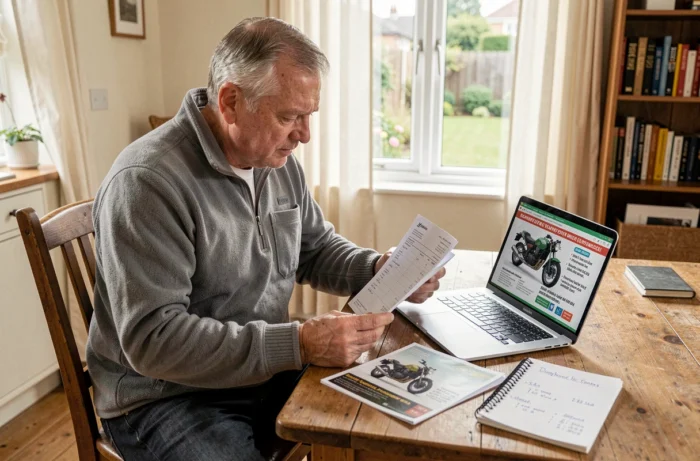
Not all insurers cover tricycles resulting from transformation. Some require seeing the minutes of the RTI and the updated registration certificate before issuing a contract. Others simply refuse this type of vehicle. Comparing several insurance quotes before starting the transformation allows for anticipating this item in the overall budget.
The required license depends on the power and weight of the trike. Under certain conditions, a Class B license is sufficient to drive a motor tricycle, which attracts drivers who do not have a motorcycle license. This regulatory peculiarity partly explains the growing interest in trike conversions, especially on models like the Goldwing that offer driving comfort suitable for long trips.
The total cost of a transformation into a trike is therefore not limited to the displayed price of a kit. The realistic budget adds up the kit, specialized labor, mechanical adaptations, preparation of the technical file, the RTI, and insurance. Requesting several detailed quotes from specialized workshops, while systematically checking the scope of each offer, remains the most reliable method to prevent an exciting project from becoming a source of financial frustration.