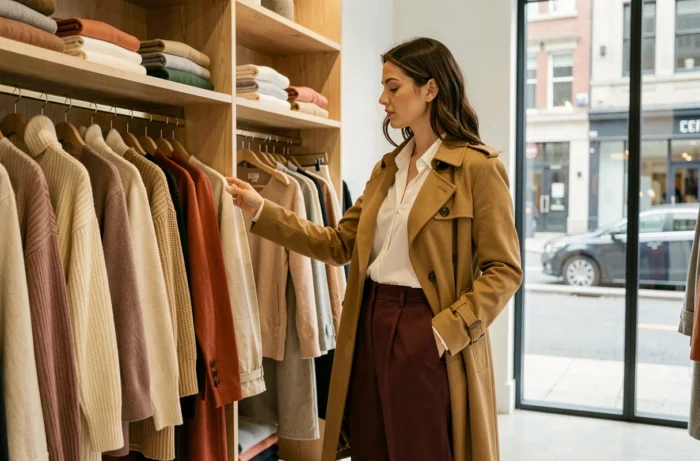
Women’s online fashion is no longer just a catalog of clothing that can be viewed from a screen. The French clothing market is undergoing a measurable transformation: in-store purchases are declining, e-commerce in fashion is growing, and new segments (second-hand, ultra-fast fashion) are reshaping the distribution of volumes. What indicators allow us to distinguish a sustainable trend from a seasonal effect in this ever-evolving style universe?
E-commerce fashion and physical stores: where value is shifting
The figures published by the Alliance du Commerce at the beginning of September 2026 present a clear observation. The table below summarizes the dynamics observed in the summer of 2026 in France.
| Sales Channel | Change in Revenue (Summer 2026) |
|---|---|
| Clothing Stores | Decrease of nearly 2% |
| E-commerce Fashion | Increase of about 3 to 4% |
This transfer of value towards online purchases does not indicate an explosion of the overall market. The sector is stagnating, or even slightly declining as a whole. The growth of e-commerce partially compensates for the erosion of physical stores, without completely neutralizing it.
For consumers, this shift changes the way trends are spotted. Seasonal looks and key pieces (structured dresses, buckle shoes, leather accessories) are now discovered through navigation on the Pulpe de Coton fashion site or other specialized platforms, rather than in storefronts.

Second-hand and ultra-fast fashion: a quarter of purchased volumes
The Institut Français de la Mode noted that in 2025, second-hand represents more than 10% of clothing consumption in France. Among 18-24 year-olds, this share rises even further. By combining second-hand and ultra-fast fashion, we reach about a quarter of the clothing volumes purchased.
A European study from September 2026 confirms the extent of the phenomenon: 58% of Generation Z consumers report having purchased second-hand clothing or accessories. This is no longer a marginal behavior; it is a structural buying reflex.
What this changes for style and trends
Second-hand is reshuffling the cards of fashion inspiration. A vintage piece (oversized blazer, patinated leather bag, 1990s pleated skirt) coexists with new clothing in the same look. The colors and cuts that return in autumn-winter are no longer dictated solely by brand collections: they also emerge from the most sought-after pieces on resale platforms.
- Floral print dresses from past seasons find a second life as early as the following spring, worn differently.
- Accessories (bags, belts, shoes) are the most sourced category in second-hand, as their durability justifies the purchase of used items.
- Brands focused on quality materials fare better in resale: a well-cut wool coat retains its value, while low-quality polyester does not.
Online fashion regulation: anti-fast fashion law and influencer oversight
The French legal framework is evolving alongside the market. Law No. 2026-602 of July 8, 2026, introduces a new regulatory mechanism targeting brands with ultra-fast collection renewals. The stated objective: to curb textile overproduction and hold online sales platforms accountable.
On the influencer side, France has had a specific legal framework since 2023. Fashion content creators must disclose paid partnerships, and certain promotional practices will be banned starting in 2027. This evolution directly affects consumers who discover their fashion inspirations through social media.
Concrete impact on online clothing purchases
For a buyer, these rules change the interpretation of fashion content. A look presented by an influencer without a partnership mention becomes suspicious. Product pages on fashion sites must include more information on the traceability of materials.
However, second-hand platforms currently escape most of these constraints, which enhances their perceived attractiveness among buyers concerned with transparency.
Building a coherent wardrobe: quality of pieces versus volume of looks
Product returns remain the Achilles’ heel of fashion e-commerce, and poorly made pieces fuel this cycle. A women’s wardrobe designed to last relies on a few precise choices.
- Favor natural materials (cotton, linen, wool) whose drape improves over time, rather than synthetic fibers that pill after three washes.
- Invest in structured pieces (coat, blazer, shoes) and vary accessories to refresh looks without multiplying purchases.
- Check the size guides specific to each brand before ordering, as grading discrepancies between brands remain common.
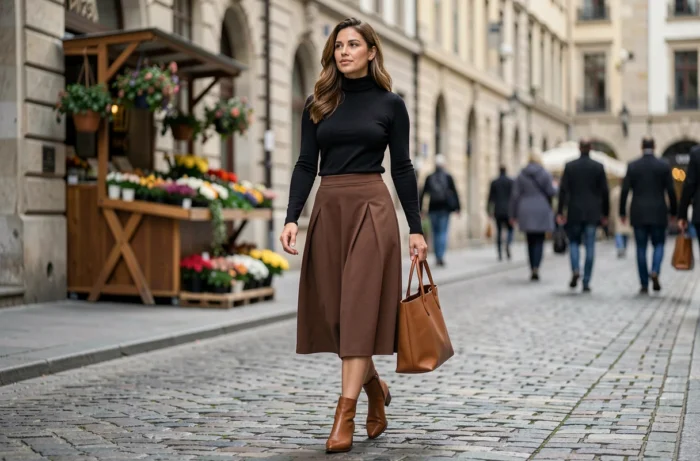
The autumn-winter 2026 trends confirm this logic. Muted colors (burgundy, navy, camel) dominate the selections of specialized sites, and fitted cuts are returning after several seasons of loose silhouettes. The most sought-after pieces are those that can transition through two seasons without appearing dated.
The online women’s fashion market is now viewed through two lenses: that of style, still driven by seasonal trends and runway inspirations, and that of data, which reveals a sustainable shift towards digital and a growing weight of second-hand. The next season will not change this trajectory.