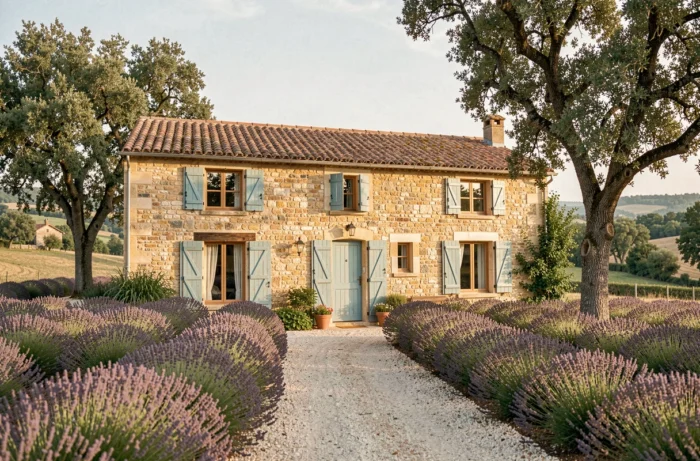
The regulatory framework for vacation rentals in France has significantly evolved in recent years, with the types of stays diversifying and travelers’ expectations changing as well. Understanding what distinguishes the different accommodation solutions allows for a choice that fits one’s budget, the duration of the stay, and the desired level of comfort.
Mandatory registration number: what the law requires since May 2026
Before comparing platforms or types of accommodations, a regulatory point deserves your attention. Since May 20, 2026, all tourist accommodations must display a registration number in their listing, regardless of the municipality. This obligation, once limited to certain cities, now applies throughout the entire French territory.
In practical terms, if you book a vacation rental and the listing does not mention any number, it’s a warning sign. The owner may not be compliant, which could pose problems in case of disputes or incidents.
This measure stems from the Le Meur law, which also gave municipalities the option to reduce the maximum rental duration of a primary residence to 90 days per year instead of 120. Some tourist cities have already activated this lever. For travelers, this means that the short-term rental offer can vary significantly from one municipality to another.
On the tax side, the micro-BIC regime applicable to unclassified furnished rentals has been tightened, with a reduced allowance and revenue cap. This tightening is pushing some owners to classify their property or turn to long-term rentals. The offer on vacation rental platforms in France is evolving accordingly.

Seasonal rental, gîte, guest room: understanding the concrete differences
These terms are everywhere, but they do not mean the same thing. Why does this choice matter when booking? Because the level of service, price, and owner obligations differ depending on the formula.
A seasonal rental is an entire accommodation rented for a short duration. You are self-sufficient: no breakfast, no daily cleaning. This is the most common formula on sites like Airbnb or Abritel.
The gîte operates similarly, but it is often labeled (Gîtes de France, Clévacances). The star or ear classification guarantees a controlled level of equipment. Owners who have their property classified benefit from tax advantages, which encourages them to maintain a quality standard.
The guest room, on the other hand, involves staying with a host with breakfast included. The number of rooms is limited to five, and the owner lives on-site. This format is suitable for short stays where one seeks human contact and local advice.
To explore these different formulas in one place, the accommodations available on Tout Mon Monde gather several categories and allow you to filter according to your stay criteria.
Criteria for choosing accommodation in France suitable for your stay
You may have noticed that two accommodations at the same price can offer radically different experiences? The price alone is not enough. Here are the criteria that make a difference on a daily basis:
- The cancellation policy: some platforms offer a full refund up to a few days before arrival, while others impose penalties as soon as the booking is made. Check the conditions before paying.
- Additional fees: cleaning, tourist tax, platform service fees. When added together, they can represent a significant portion of the total displayed price.
- The classification or label of the accommodation: a classified furnished rental (from 1 to 5 stars) meets verified criteria. An unclassified accommodation is not necessarily bad, but you have no guarantee regarding the minimum equipment.
- The owner’s responsiveness: on vacation rental sites, the average response time is often displayed. An owner who responds within a few hours generally manages their property better.
Comparing total fees rather than the price per night remains the most useful reflex to avoid unpleasant surprises. Some platforms display the all-inclusive price right from the search, while others add fees at the payment stage.
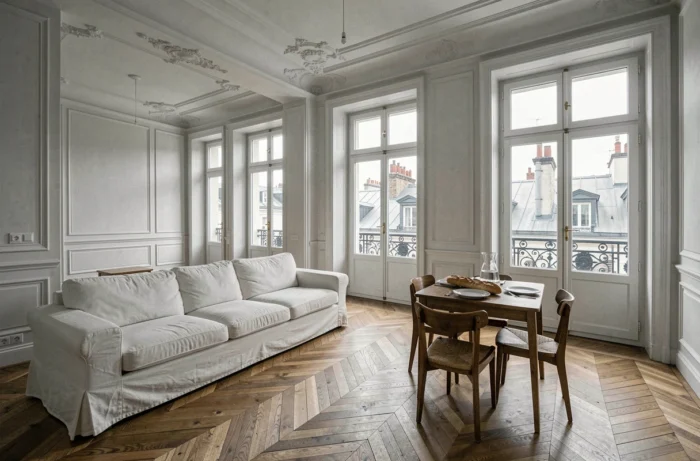
Co-ownership and tourist rental: a point often overlooked by travelers
This topic mainly concerns owners, but it has a direct impact on travelers. Co-ownerships now have a strengthened role in regulating tourist accommodations. New co-ownership regulations must clearly indicate whether tourist rentals are allowed in the building.
For a traveler, this means that an apartment booked on a platform may be in violation of the co-ownership regulations. In the most tense cases, neighbors may report the situation, and the stay could be disrupted.
Favoring accommodations whose owner mentions compliance with the co-ownership regulations in their listing reduces this risk. This is not an administrative detail: it is a condition for peace of mind during the stay.
Unusual accommodations and alternatives in France: beyond traditional rentals
The French market also offers formulas that step outside the usual framework. Treehouses, yurts, tiny houses, eco-lodges: these accommodations attract travelers seeking experience rather than just lodging.
These formats are often offered by specialized platforms or directly by the owners. Their prices vary, but availability remains limited, especially in high season. Booking several weeks in advance is often necessary.
Home exchange is another option for stays in France. The principle is simple: you exchange your accommodation with another owner, without any financial transaction for the lodging. This model is suitable for families or regular travelers who themselves have an attractive property.
Ultimately, the choice of accommodation in France depends on three concrete elements: the regulatory compliance of the accommodation, the actual cost of the stay once all fees are included, and the suitability of the chosen formula to your comfort expectations. A quick check of the registration number, co-ownership regulations, and all-inclusive price is enough to eliminate most unpleasant surprises.