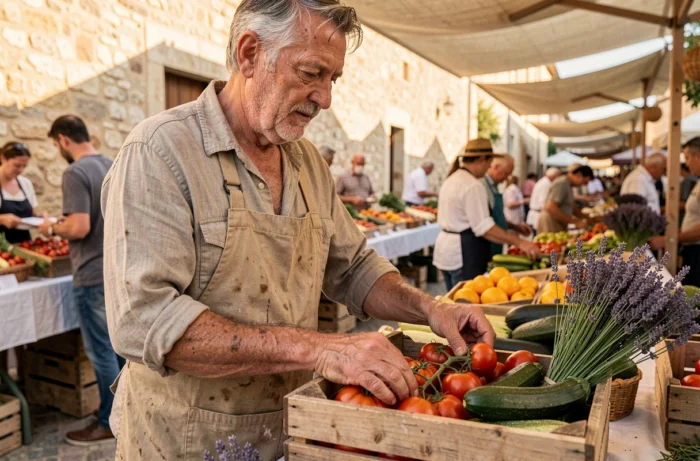
A farm product from the South of France refers to a food item sourced from a local farm, processed and sold by the producer themselves or through a short supply chain limited to one intermediary. This definition encompasses both aged goat cheese from Provence and honey harvested in the Pyrenees, as well as vegetables grown in the Garonne Valley.
Health Declaration and Traceability of Farm Products
Before discussing flavors, it is essential to understand what distinguishes a genuine farm product from mere marketing labeling. French regulations require producers selling animal-derived goods (eggs, cheeses, honey, meats) to submit a health declaration to the departmental directorate for population protection, particularly via the Cerfa form 13984.
This mandatory step ensures that the farm complies with hygiene and traceability standards. When a producer delivers to a restaurant or grocery store, a waiver of health approval, or even full approval, may be required in addition.
For buyers, the most reliable verification remains to ask for the precise origin of the ingredients and the identification of the supplier. The term “local” does not have a single legal definition: a restaurant menu can display “local products” without indicating a maximum distance or naming the producer.
Cross-checking invoices and asking direct questions to the seller remains the best reflex. Several farms in the South list their productions and practices on their own websites, as can be seen on https://lafermedumidi.fr/, which details the offered supply chains.
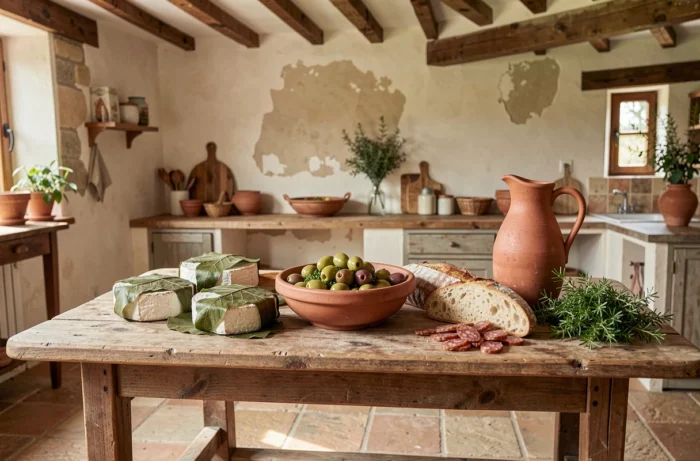
Producers’ Stores in the South: A Unique Circuit
Producers’ stores are multiplying between Tarn, Garonne, and the foothills of the Pyrenees. Their model differs radically from gourmet shops or the local produce section of a supermarket.
A producers’ store is owned and managed collectively by farmers. The supply must primarily come from the associated farms. The producers themselves ensure shop hours, creating a direct link between the grower and the buyer.
- The sheep cheese comes from the farm whose name appears on the label, and the shepherd can explain the breed, the herd’s diet, and the aging duration.
- Seasonal vegetables follow a strict calendar: no tomatoes in January, no squash in June. Seasonality dictates the content of the display.
- The honey is harvested from an identifiable geographical radius, often linked to a specific floral terroir (lavender in Provence, chestnut in Cévennes, garrigue in Hérault).
This circuit is also distinguished by price setting: it is the producer who decides their margin, without negotiation imposed by a distributor. This autonomy explains sometimes higher prices per kilo, but the entire value returns to the farm.
Olive Oil and Farm Cheese: Read the Labels Before Buying
Two products concentrate the gastronomic identity of the South and deserve careful analysis: olive oil and cheese.
Terroir Olive Oil
An olive oil sold at a Provençal market is not automatically pressed from local olives. Only the mention of an AOP or AOC guarantees the geographical origin of the olives and the pressing. Appellations like Nyons, Vallée des Baux-de-Provence, or Aix-en-Provence indicate a strict specification concerning the varieties of olive trees, the harvest area, and the extraction process.
Outside of an appellation, verifying the origin requires reading the country of harvest on the label. The INCO regulation obliges producers to mention this information, but the typography is sometimes discreet.
Farm Cheese: The Mention That Changes Everything
The mention “farm” on cheese is regulated. It means that the milk comes exclusively from the farm’s herd and that the processing takes place on the farm. Cheese labeled “artisanal” or “local” does not offer the same guarantee: the milk may come from multiple farms.
In the South, farm goat cheeses dominate the displays, from Pélardon cévenol to Banon from Haute-Provence. Saint-Nectaire or Tomme des Pyrénées illustrate the diversity of pressed cheeses available between Montauban and the Pyrenean foothills.
Labels and Certifications: What Truly Protects the Consumer
The profusion of logos on a farm product’s packaging can be confusing. Not all are equal in terms of control and rigor.
- AOP / AOC: the product is made, processed, and developed in a defined geographical area, according to recognized know-how. Control is ensured by an independent organization.
- Label Rouge: it certifies a higher quality level compared to a standard product in the same category. The farming or cultivation conditions are more demanding (feeding, space, duration of raising).
- Organic Agriculture (AB): guarantees the absence of synthetic pesticides and GMOs. The French AB logo or the European leaf are the only official signs.
- Value-adding mentions without external control (“terroir product,” “traditional recipe,” “authentic”): they only bind the producer and are not subject to any third-party certification.
A farm product can accumulate several of these signs. For example, a lavender AOP and AB honey meets two distinct specifications and undergoes two separate audits.
Identifying a reliable farm product in the South of France relies less on the market’s decor than on three concrete reflexes: checking the “farm” mention or appellation, asking for the name and location of the farm, and favoring points of sale where the producer is physically present. The terroir is first read on the label.