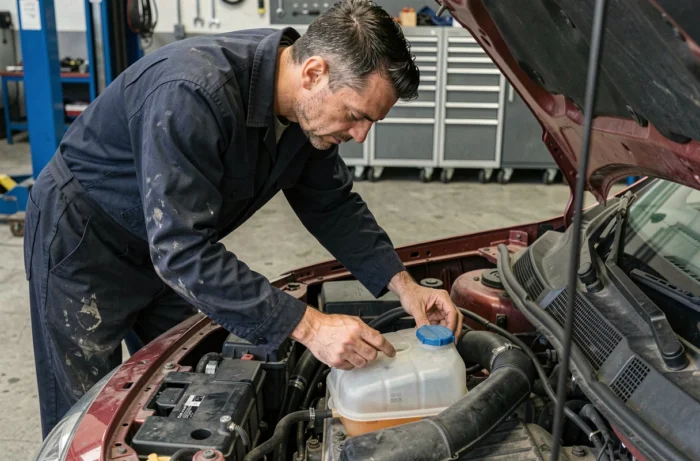
The drop basin warning light on the Clio 3 is one of the most misinterpreted indicators on the dashboard. Contrary to what many forums suggest, this symbol has nothing to do with engine oil changes or coolant. It signals a problem related to the braking hydraulic circuit, more specifically the level or pressure of the brake fluid.
Clio 3 Braking Circuit: What the Warning Light Really Detects
Confusion is common because the pictogram resembles a drop of water falling into a basin. Many Clio 3 owners think it indicates an issue with coolant or water in the engine. The warning light is actually connected to a level sensor located in the brake fluid reservoir, under the driver’s side hood.
This sensor does not measure the quality of the fluid. It does not detect moisture or the boiling point of the brake fluid. Its role is limited to checking that the fluid level remains above the minimum threshold and that the pressure in the circuit is consistent. The distinction is important: adding fluid can turn off the warning light without resolving the underlying issue.
To better understand the meaning of the drop basin warning light on Clio 3, it is essential to keep in mind that this indicator belongs to the family of active safety alerts, not routine maintenance reminders.
Drop Basin Warning Light On: The Most Common Causes on Clio 3

A low brake fluid level is the most common cause, but not the only one. Several malfunctions can trigger this alert, and addressing them solely by adding fluid exposes the owner to a quick recurrence.
- Advanced wear of brake pads: when the pads thin out, the caliper pistons advance in their housing, causing the fluid level in the reservoir to drop without any leaks. The warning light then lights up mechanically, due to volume effect.
- Leak in the hydraulic circuit: a cracked brake line, a faulty caliper seal, or a corroded pipe can cause fluid loss. The basin signals a drop in pressure, which makes braking potentially dangerous.
- Faulty level sensor: on high-mileage Clio 3 models, the sensor float can get stuck or the electrical connector can corrode. The warning light then comes on without the actual level being abnormal.
- Problem with the handbrake switch: on certain versions, the drop basin warning light shares an alert circuit with the parking brake. A poorly adjusted switch or a handbrake that is not fully released can keep the indicator lit.
The difficulty for the owner is that several of these causes produce exactly the same visual symptom on the dashboard. Only a methodical diagnosis can clarify the situation.
Clio 3 Brake Warning Light Diagnosis: The Elimination Method
The first check is to turn off the ignition, fully release the handbrake, and then turn the ignition back on. If the warning light disappears, the problem was with the handbrake switch. This operation takes a few seconds and eliminates the most benign cause.
If the warning light persists, the hood must be opened, and the brake fluid reservoir visually inspected. The level should be between the MIN and MAX markings engraved on the translucent tank. A level close to or below the minimum confirms the alert.
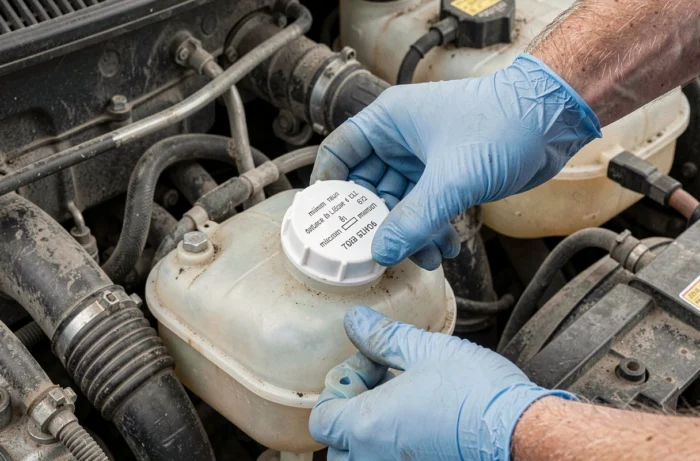
At this stage, the temptation is to simply top off the fluid and get back on the road. Professionals have been advising against this approach for several years. The current trend among workshops is to recommend a quick stop of the vehicle and a check of the sensor and electrical circuit, not just a top-off. A low level is a symptom, not a diagnosis.
Check the Condition of the Pads Before Topping Off
If the pads are worn to the point of lowering the fluid level, adding fluid only masks the problem. Worse, when the pads are replaced in the future, the pistons will be pushed back, and the fluid level will rise above the maximum, creating a risk of overflow.
The best practice is to check the thickness of the pads (visible through the calipers on most Clio 3 models) before any intervention on the fluid. If wear is advanced, replacing the pads will resolve the alert.
Look for a Leak if the Level Drops Without Pad Wear
When the pads are in good condition but the level is low, a leak is likely. It is necessary to visually inspect the hoses, connections, and calipers for signs of moisture or seepage. Any leak in the braking circuit requires immediate workshop attention. Driving with a circuit that is losing fluid means accepting the risk of partial or total brake failure.
Clio 3 Brake Fluid Maintenance: What Current Recommendations Advise
Brake fluid is hygroscopic: it absorbs ambient moisture over time. This absorption gradually degrades its boiling point, which can cause a vapor lock phenomenon (formation of vapor bubbles in the circuit) during prolonged or intense braking.
Current maintenance recommendations tend to shorten the intervals for replacing brake fluid compared to older manufacturer schedules. The goal is not to wait until the fluid is degraded to the point of compromising braking efficiency.
Replacing brake fluid involves a complete purge of the hydraulic circuit, a process that requires appropriate tools and a precise procedure (sequential purging of the four wheels in a defined order). A simple top-off does not renew the fluid already present in the pipes and calipers.
The Clio 3 drop basin warning light remains a signal that should not be taken lightly, even if it turns off after a top-off. A warning light that frequently reappears indicates an untreated underlying cause, whether it be pad wear, a micro-leak, or an aging sensor. Addressing the symptom without identifying the source means postponing an intervention that directly affects the vehicle’s safety.