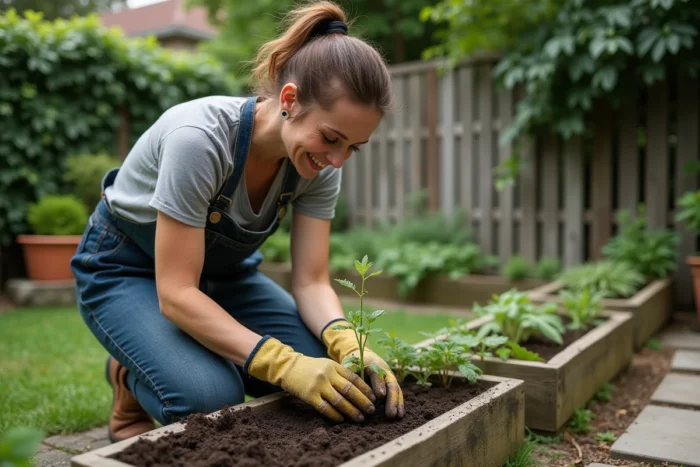
Between poorly prepared soil that suffocates roots and poorly calibrated watering that wastes water, landscaping mistakes in the garden pay off over several seasons. Comparing common practices with emerging approaches allows us to measure the gap between a resource-hungry garden and a resilient outdoor space. This overview confronts the available data on mulching, watering, and alternatives to traditional lawns to identify the most effective levers.
Mulching, watering, and ground covers: a comparative table of garden practices
Three areas concentrate the majority of time and water consumption in a garden: soil management, irrigation, and maintenance of grassy surfaces. The table below contrasts traditional practices with low-maintenance alternatives that reduce workload and water consumption.
| Area | Traditional Practice | Low-Maintenance Alternative | Water Consumption Difference |
|---|---|---|---|
| Soil Protection | Bare soil, regular tilling | Thick and permanent organic mulching | Notable reduction in evaporation |
| Watering | Spray watering, wet foliage | Drip irrigation at the base of plants | 30 to 40% water savings |
| Grassy Surface | Traditional lawn (weekly mowing, summer watering) | Hardy ground covers (creeping chamomile, flowering mixes) | Almost no watering once established |
Drip irrigation, more precise than manual watering, targets each plant without wetting the foliage, which also limits the development of fungal diseases. Gardeners report that it is possible to learn more on Conseil au Jardin to adapt these techniques to each type of soil and climate.
Living Soil and Permanent Mulching: the Foundation of a Water-Efficient Garden
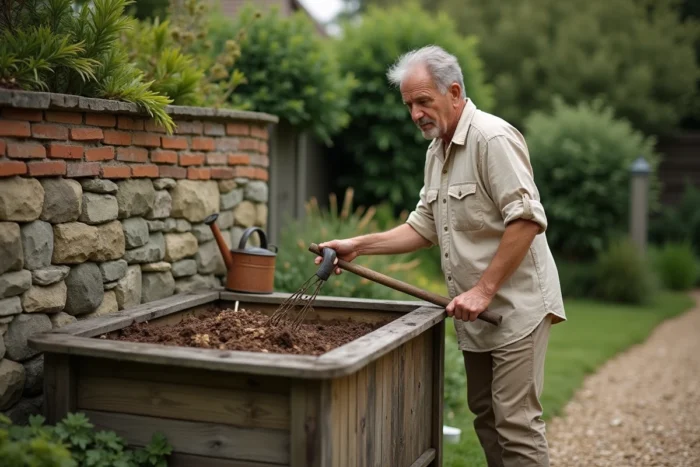
The quality of the soil determines the garden’s ability to retain water and nourish plants without constant inputs. Compacted or bare soil loses a significant portion of its moisture through direct evaporation, especially in summer.
Organic mulching (wood chip, dead leaves, straw) serves three simultaneous functions: it slows evaporation, limits the germination of weeds, and nourishes soil fauna as it decomposes. A sufficiently thick layer, renewed once or twice a year, transforms poor soil into a loose and aerated substrate over a few seasons.
When and How to Mulch Effectively
Mulching in spring, after the soil has warmed up, yields the best results. Mulching placed on still cold soil slows the start of vegetation.
- Spread the mulch over previously weeded and moist soil, leaving a few centimeters of space around the plants’ crowns to avoid rot
- Favor a mix of textures (coarse mulch underneath, finer material on top) to promote gradual decomposition
- Renew the layer in autumn with shredded dead leaves, which will decompose over winter and enrich the soil the following spring
This cycle of permanent mulching drastically reduces the need for tilling and watering. The soil remains moist even after several days without rain, whereas bare soil cracks within hours of intense heat.
Watering in the Garden: Why Reducing is Better than Optimizing
The classic reflex is to seek the best watering system. The trend emerging from recent recommendations by municipalities and specialized media goes further: the goal is no longer to water better, but to water less.
This change in perspective relies on the combination of several levers rather than a single technical gesture. Mulching reduces evaporation. Choosing native perennials that are low in water needs decreases the demands at the source. Watering at the base, early in the morning, limits losses.
Accepting a Less Green Garden in Summer
One of the most persistent psychological barriers remains the image of a bright green lawn in the middle of August. This aesthetic standard requires considerable volumes of water. A lawn that yellows in summer is not dead; it goes dormant and naturally greens up again with the first autumn rains.
Cities and awareness organizations now recommend robust alternatives to lawns that are more drought-resistant: creeping chamomile, clover, flowering mixes, hardy ground covers. These diverse plant mats withstand heat episodes better and require little or no mowing.
Plants Adapted to the Climate: The Selection Criterion That Changes Everything
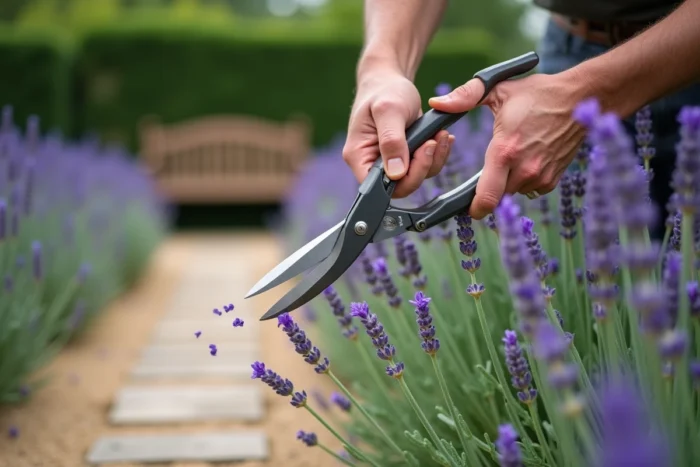
The choice of plants determines the maintenance burden for the coming years. An exotic shrub planted in calcareous and dry soil will require watering, amendments, and winter protections that its native equivalent will never need.
- Observe neighboring gardens and public spaces in the community to identify species that thrive without intervention, a sign of good adaptation to local soil and climate
- Group plants by water needs (dry zones, medium zones, wet zones) to avoid uniformly watering a garden with heterogeneous needs
- Limit the size of plants by choosing varieties whose mature form fits the available space, rather than pruning a vigorous shrub every year
Less pruning means less green waste and less stress for the plant, which retains its natural shape and blooms better. This simple principle reduces the pruning chore by several hours each season.
Native Perennials and Biodiversity in the Garden
Local perennials attract pollinators and garden helpers (ladybugs, hoverflies, hedgehogs) that naturally regulate pests. A garden planted with native species requires fewer treatments, as the ecological balance establishes itself over two to three seasons.
This approach, presented as the new responsible norm rather than a marginal option, involves accepting a garden that is less “tidy” but significantly more autonomous. Less water, more biodiversity: the compromise is measured in hours of maintenance saved each month and a reduced water bill at the end of summer.
The resource-efficient garden is not just a list of isolated actions. It is the interplay between living soil, reduced watering, and plants chosen for the right location that produces a sustainable result. The most telling data remains that of drip irrigation, which alone reduces water consumption by a third compared to traditional watering, without sacrificing plant health.