
Meat left exposed to the air for a few minutes is enough for a female blowfly (Calliphora, Lucilia) to lay a cluster of eggs on it. The reflex to scrape the surface and continue cooking only addresses part of the problem: the flesh flies simultaneously inoculate pathogenic bacteria onto the substrate. Understanding this dual risk, mechanical and microbiological, is essential before handling the food.
Microbiological contamination associated with fly eggs on meat
Removing visible eggs does not eliminate the bacterial load. Flesh flies carry microorganisms on their legs and mouthparts collected from decaying matter, feces, or organic waste. At the time of laying, these agents deposit on the surface of the meat and begin to proliferate if the ambient temperature allows.
Meat exposed at room temperature quickly becomes risky even if the eggs are removed. Food safety experts advise against any attempt to salvage a piece of meat that has been left exposed for a long time in the presence of flies, as the exposure time exacerbates bacterial colonization well beyond the visible laying area.
To find out how to remove fly eggs from meat, we recommend systematically assessing two parameters before deciding the fate of the piece: the duration of exposure outside refrigeration and the surface area affected by the laying. If the meat has been at room temperature for more than a few minutes and eggs are present in several areas, discarding it remains the safest decision.
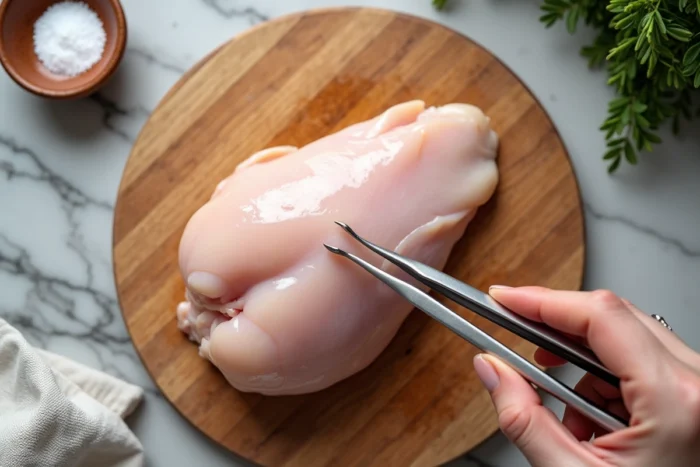
Mechanical removal of fly eggs: technique and limitations
Blowfly eggs appear as small white sticks, often clustered in folds, cuts, or moist areas of the meat. Their adherence to the substrate varies depending on the species and the moisture level of the surface.
Protocol for removal from fresh meat
- Rinse the meat under a powerful jet of cold water while rubbing the surface with the back of a clean knife blade. Cold water detaches the clusters more easily without starting to cook the surface fibers.
- Visually inspect each fold, cavity, and tendon area: females prefer crevices to protect their laying.
- Generously trim the contaminated area by removing a thickness of flesh around the cluster, then rinse again.
- Immediately place the trimmed meat in the refrigerator or cook it without delay.
Trimming must be extensive, not superficial. Simply scraping the eggs off the surface potentially leaves larvae already hatching in the first millimeters of flesh, as incubation can be very rapid in warm conditions.
What mechanical removal does not resolve
Mechanical cleaning removes the visible mass of eggs. It does not sterilize the surface. For meat intended for consumption, cooking to the core remains the only thermal treatment capable of neutralizing both any residual larvae and the bacteria deposited during laying.
Freezing and cooking: two complementary treatments against larvae
Freezing effectively kills insect eggs and larvae in food products. We regularly use it as a safety net on pieces of meat that have been briefly exposed before being trimmed and rinsed.
Freezing does not compensate for already initiated degradation. If the meat showed signs of spoilage (odor, color change, slimy texture) before contamination by flies, freezing will only freeze a product that is already unfit for consumption. Cold stops the development of larvae; it does not restore the microbiological quality of degraded food.
On the cooking side, raising the core temperature destroys the proteins of the eggs and larvae. Prolonged cooking at sufficient temperature remains the most reliable treatment. We observe that the combination of trimming, rinsing, and then immediate cooking offers the best compromise for meat that has been recently contaminated and is still in good organoleptic condition.

Preventing flesh fly laying in the kitchen
Acting upstream is more effective than any removal protocol. Flesh flies locate their target through volatile compounds emitted by organic matter, and they lay eggs in just a few seconds once settled.
Management of organic waste and the trash can
The kitchen trash can is the primary attraction hotspot. A poorly closed bag containing meat or fish scraps attracts flies from outside and offers them an alternative laying site close to your work surfaces.
- Use a tightly sealed bin and empty organic waste daily during warm periods.
- Rinse the bottom of the bin with white vinegar after each emptying to eliminate odor residues.
- Never leave raw or cooked meat unprotected (cloche, plastic wrap, refrigerator) even for a few minutes.
Flesh flies lay eggs in less time than it takes to answer the phone. Systematically covering any protein food as soon as it leaves the refrigerator or heat source is the most cost-effective preventive action.
Physical barriers and repellents
Window screens are the most reliable barrier. We recommend checking their condition at the beginning of each season, as a single torn mesh is enough to let these medium-sized insects through. Additionally, certain oils like citronella or clove have a temporary repellent effect on diptera, without guaranteeing total protection.
Trapping (sticky traps, bait traps) reduces the adult population in an enclosed space but does not prevent an isolated female from reaching the meat. No repellent replaces the physical covering of the food.
The most robust strategy combines three levels: screens on openings, systematic covering of food, and rigorous waste management. Each missing link multiplies the risk of laying. For meat that has already been affected, the decision depends on the exposure time and the condition of the product, with mechanical removal followed by cooking to the core only justified for a fresh piece contaminated for a very short time.