In France, motorists keep their cars for an average of nearly 12 years, which is about 2.5 years longer than 15 years ago according to Franceinfo. This figure changes the game: we no longer maintain a recent vehicle to keep it clean; we renovate an aging vehicle to give it several more years of life. Customization and maintenance converge in a shared logic of extending the vehicle’s lifespan.
Body protection: vinyl film and hydrophobic paint against corrosion
When driving a vehicle that is eight or ten years old, stone chips, micro-scratches, and the first signs of rust become the number one problem. Repainting a hood or fender is expensive, and the original paint loses its shine long before the vehicle’s mechanical life is over.
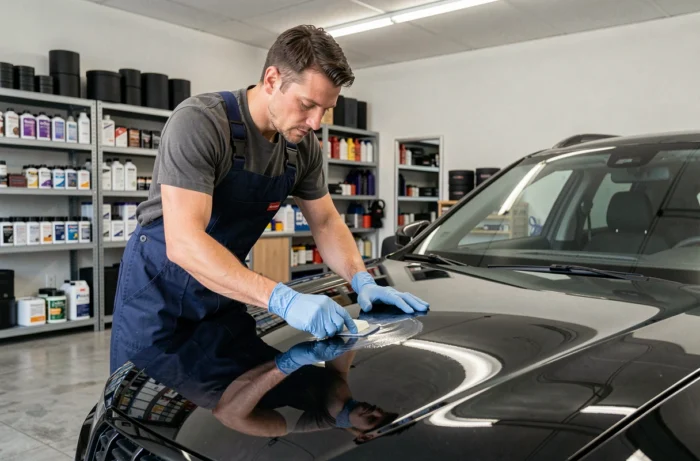
The protective vinyl film (often called PPF, for Paint Protection Film) serves as a physical barrier against these aggressions. Applied to exposed areas (hood, bumper, side skirts), it absorbs impacts without altering the original color. It is replaced every few years, which is cheaper than a complete repaint.
Hydrophobic and oleophobic paints represent the other option. Applied as a ceramic treatment on the bodywork, they repel water, greasy residues, and bird droppings. Cleaning becomes quicker, and corrosion protection is mechanically enhanced since moisture stagnates less in surface micro-defects. To keep up with the latest references in automotive products and equipment, specialized resources like zone-auto.eu allow for comparison of available solutions before making a decision.
Color wrapping and interior dressing: customize without devaluing
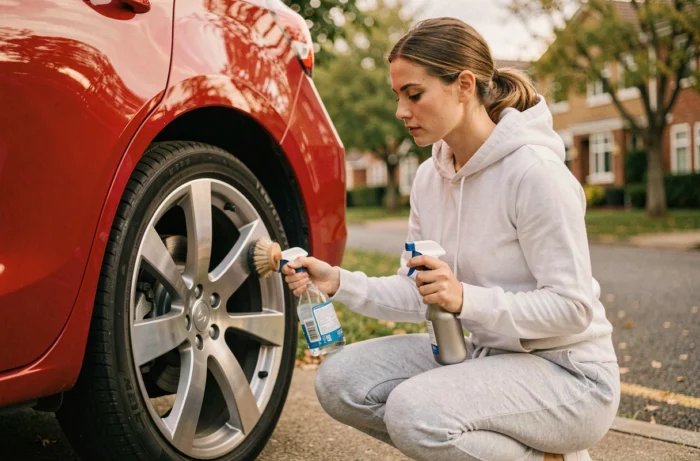
Total wrapping has taken a considerable place in automotive customization in recent years. The principle: we wrap the body in a colored, matte, satin, or textured vinyl film without touching the original paint.
Why wrapping protects resale value
Unlike a custom paint job, wrapping is reversible. The film is removed, and the factory paint reappears intact underneath. For a vehicle that one wishes to sell in a few years, this is a decisive advantage: wrapping changes the style without affecting the Argus value.
The most sought-after colors range from matte shades (nardo gray, satin black) to iridescent finishes. Feedback on durability varies depending on the quality of the film and climatic conditions, but generally, a mid-range film holds up well for three to five years.
Interior dressing: leather, alcantara, and carbon inserts
The interior often ages faster than the mechanics on a vehicle kept for a long time. Worn seats, dull plastics, a worn steering wheel: these signs of wear give the impression of a vehicle at the end of its life while the engine runs perfectly.
- Leather or faux leather upholstery for the seats and steering wheel gives a new look for a fraction of the cost of a complete replacement.
- Carbon fiber (or carbon imitation) inserts on the center console and air vent surrounds add a sporty style without structural modification.
- Replacing the gear shift knob and pedals remains one of the simplest and least expensive customizations, with an immediate visual effect.
Preventive maintenance of an aging vehicle: key areas not to neglect
With vehicles being taken off the road on average after nearly 20 years and more than 200,000 km according to SDES, preventive maintenance becomes a profitable investment, not just a formality. We are no longer talking only about oil changes and filters: on an older vehicle, certain critical areas are often wrongly postponed.
Timing belt, braking, and suspension: the trio that saves the mechanics
The timing belt remains the part whose late replacement costs the most in engine damage. On a vehicle over ten years old, we also check the suspension bushings (whose degradation often goes unnoticed) and the condition of the rear discs and pads, often forgotten in favor of the front.
- The timing belt should be replaced according to manufacturer recommendations, but also based on the age of the rubber (even if the mileage has not been reached).
- Shock absorbers gradually lose effectiveness, making degradation difficult to perceive in daily use. A bench test at a technical control center provides an objective measurement.
- Brake fluid oxidizes over time and absorbs moisture, lowering its boiling point. Replacing it every two years prevents a loss of braking efficiency.
Independent networks and budget control for maintenance
The cost of car repairs is rising, and more and more owners are turning to independent garages rather than manufacturer networks.
According to Zepros Auto, MRA (automotive repair mechanics) networks retain about a third of the maintenance-repair market. For a vehicle out of warranty, going through an independent reduces the bill without compromising quality as long as you check that the garage uses manufacturer-standard parts.
LED lighting and connected accessories: modernizing an old vehicle
Replacing halogen bulbs with approved LEDs (French regulations now allow certain LED retrofit kits) improves nighttime visibility and gives a fresh look to the front end. The investment remains modest compared to a wrap or upholstery refurbishment.
On the connectivity side, car radios compatible with Android Auto and Apple CarPlay can be installed in most vehicles using DIN adapters. This allows for navigation, streaming music, and voice commands without changing cars. Wireless backup cameras, which attach to the license plate holder, complete this technological upgrade for just a few dozen euros.
Customizing and maintaining an aging vehicle has never made more economic sense. With an aging vehicle fleet, every euro invested in body protection, preventive replacement of wear parts, or modernization of the interior pushes back the date of purchasing a new vehicle, whose average price continues to rise.