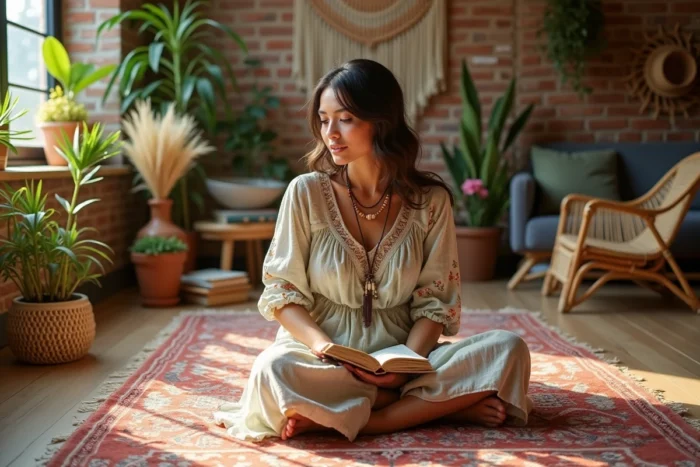
The term “bohemian” today encompasses very different aesthetic realities. Between the accessory-laden boho chic and the minimalist bohemian with curated textures, sub-currents have multiplied in recent years. Measuring these differences allows us to understand what the bohemian lifestyle truly entails and to identify the concrete choices that structure an interior, a wardrobe, or a daily life aligned with this spirit.
Bohemian Sub-Currents: What Each Variant Prioritizes
The word “bohemian” now functions as an umbrella term. Several sub-currents coexist, each with its own visual markers and material priorities. Confusing them is akin to comparing decorative and clothing logics that sometimes have only a distant aesthetic link.
| Sub-Currents | Dominant Palette | Preferred Materials | Composition Logic |
|---|---|---|---|
| Boho Chic | Warm tones, golds, terracotta | Velvet, brass, silk | Controlled accumulation, layering of patterns |
| Natural Boho | Beige, off-white, sage green | Linen, rattan, raw wood | Spaced artisanal pieces, visual breathing |
| Minimalist Bohemian | Neutrals with a unique accent | Thick cotton, ceramics, stone | A strong visual anchor, remains discreet |
| Afrobohemian | Ochre, indigo, deep red | Wax, raffia, handmade weavings | Geometric patterns and pieces with strong cultural identity |
| Sunny Boho | Mustard yellow, coral, turquoise | Macramé, jute, terracotta | Mediterranean inspiration, travel objects |
This table highlights a often overlooked point: the palette and materials determine the sub-current more than the number of objects. A living room can contain few pieces and still be deeply bohemian if the textures and colors carry the identity.
The content published by Bohème Magazine regularly documents these distinctions, helping to situate one’s own choices within a specific current rather than in a general aesthetic blur.
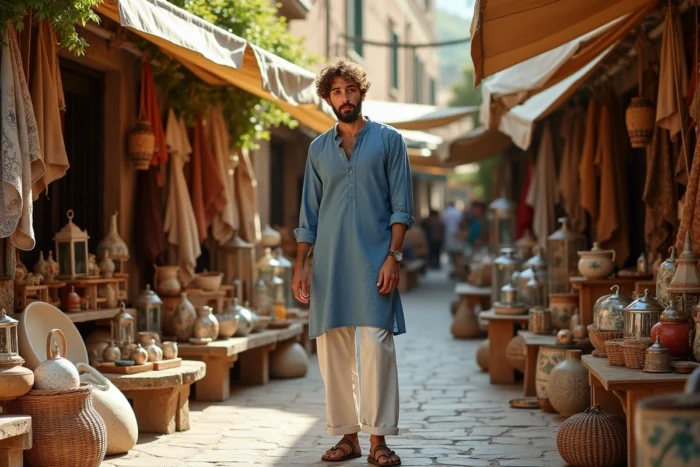
Bohemian Decoration in 2026: The Shift from Maximalism to Statement Pieces
The clearest trend observed recently in bohemian decoration is the retreat from accumulation. Where previous boho interiors piled up cushions, rugs, plants, and travel trinkets, the dominant rule now is to select one statement piece per space.
This statement piece can be a vintage rug, a handcrafted headboard, a signature piece of furniture, or a natural fiber pendant. The rest of the room adopts a neutral base that allows this central element to breathe.
Why This Shift Changes Concrete Choices
An “edited” bohemian interior requires fewer objects but better-chosen ones. The budget focuses on one or two pieces with strong identity rather than on a dozen decorative accessories. This also alters purchasing circuits: flea markets, second-hand shops, and local craftsmanship become priority sources, not out of stance, but because unique pieces are found there that are unavailable in mass distribution.
- A vintage kilim or beni ouarain rug often serves as a visual anchor in a bohemian living room, placed on a neutral floor
- Rattan or woven fiber pendants replace classic chandeliers and are sufficient to mark a room’s identity
- A sculpted wood or macramé headboard transforms a simple bedroom into a bohemian space without further additions
On the other hand, multiplying small decorative objects without visual hierarchy produces the opposite effect: a cluttered interior that loses its readability. The most common mistake remains confusing accumulation with authenticity.
Bohemian Lifestyle and Sustainability: Second-Hand Objects as Markers of Authenticity
The bohemian spirit has always maintained a connection with travel, recovery, and the repurposing of objects. What has changed is that second-hand has shifted from an aesthetic choice to a criterion of coherence for those who claim this lifestyle.
Wearing a mass-produced new bohemian dress and decorating with mass-imported artisanal objects creates dissonance. Recent content on the subject emphasizes that “authentic” boho prioritizes vintage, repaired, or locally sourced pieces.
Wardrobe and Interior: The Same Principles Applied
In decoration as in fashion, the logic is the same. Rather than a total bohemian look purchased all at once, a wardrobe built piece by piece over several years embodies the bohemian spirit more.
- In fashion: a thrifted embroidered jacket, a handmade jewelry piece brought back from travel, unbleached linen or cotton
- In decoration: handmade ceramic dishware, handwoven textiles, restored furniture
- In daily life: prefer to repair an object rather than replace it, choose materials that age beautifully over time
This parallel between wardrobe and interior is rarely addressed, yet it constitutes the common thread of the bohemian lifestyle. The bohemian art of living is not limited to a visual ambiance: it involves a relationship with time and objects that values longevity over novelty.
Bohemian Colors: Natural Bases vs. Bright Accents
The choice of colors remains the most immediate lever to steer a space or outfit towards a bohemian register. Two approaches coexist.
The first is based on a foundation of natural tones (ecru, sand, taupe, sage green) with a single colored accent. The second embraces saturated colors (terracotta, indigo, mustard) from the outset, in a more maximalist logic.
The neutral base with a unique accent dominates recent trends, in line with the shift towards more streamlined interiors. Concretely, this means light walls, textiles in earth tones, and a single strong color touch provided by a cushion, a vase, or a painting.
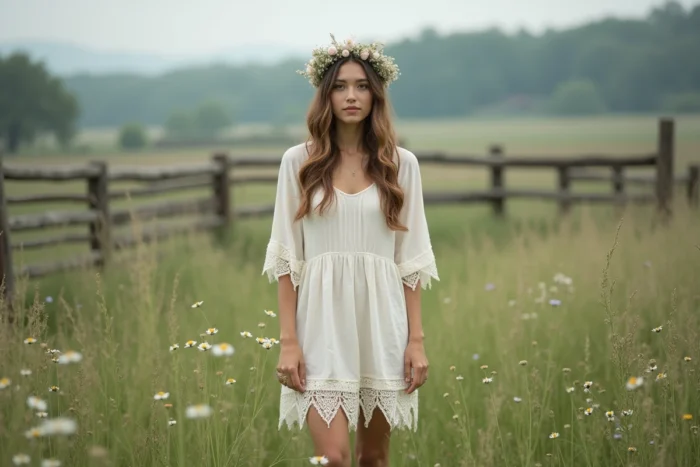
This approach also works in fashion: a beige or off-white linen outfit takes on a bohemian identity with a single colorful accessory, a printed scarf or a crafted leather belt.
The bohemian style remains a realm where personal choices take precedence over rules. The difference between a generic interior and a space that truly embodies this spirit lies less in the number of objects than in their origin, their material, and the way they tell a story. It is this narrative dimension, built over time, that distinguishes a bohemian decor from a simply decorated one.