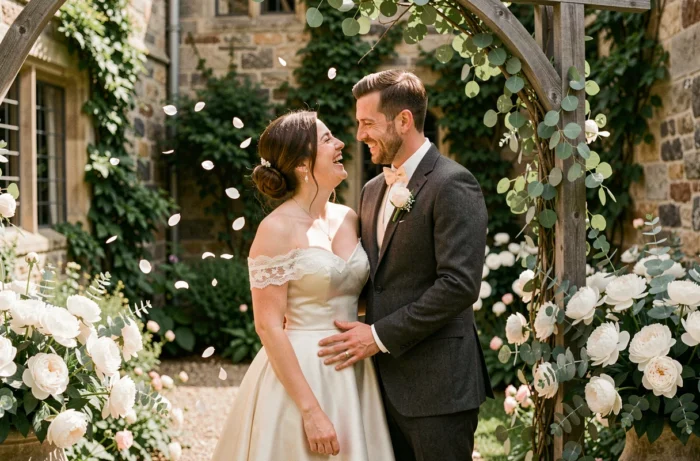
A wedding in France costs on average around 19,293 euros for 90 guests, according to a 2026 study involving 1,304 couples married in 2025. This figure represents an increase of about 25% since 2021, driven by food inflation and rising service provider rates. The first question to consider when organizing a wedding is therefore about the actual distribution of this budget and the areas where couples are currently making trade-offs.
Wedding Budget: Where the Euros Go and Where Couples Cut Back
The rise in costs does not affect all areas equally. Recent data shows a documented trend: couples maintain the quality of the meal and guest experience, but cut back on decoration, secondary outfits, and gifts.
| Item | Budget Trend 2024-2026 | Frequent Trade-off |
|---|---|---|
| Meal and Catering | Rising (food inflation) | Priority maintained, often the first item |
| Reception Venue | Rising (high demand) | Booking earlier, sometimes off-season |
| Decoration | Relative decrease | DIY, recycling, renting rather than buying |
| Guest Outfits / Gifts | Decreasing | Reduction or elimination of certain codes |
| Photographer / Videographer | Stable to rising | Considered a sustainable investment |
This table reflects a change in mentality. The goal is no longer to tick all the boxes of a “complete” wedding, but to focus resources on what creates a real memory. A mediocre meal in a lavish setting leaves fewer traces than a remarkable dinner in a simple venue.
To explore service providers and compare available options, platforms like espace-mariage.fr allow users to cross-reference offers by region and budget, facilitating these trade-offs right from the planning phase.
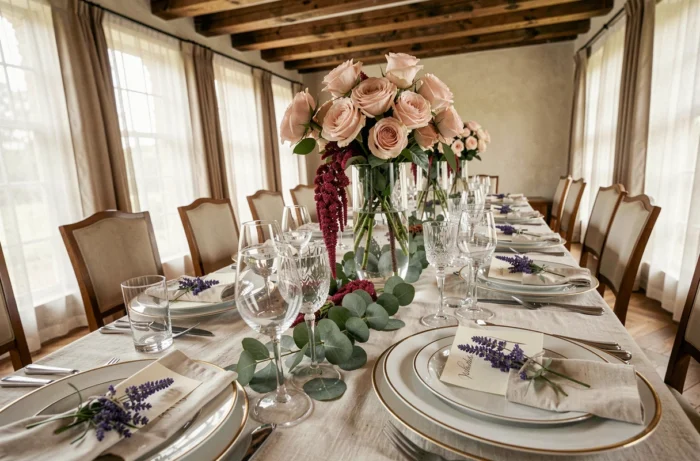
Budget Stress and Mental Load: The Constraint Ignored by Guides
Cost control, time management, and mental load are among the three main obstacles cited by couples in organizing their wedding. Traditional guides outline steps (choosing the date, listing guests, booking the venue), but rarely address stress as a factor that concretely alters decisions.
A couple under budget pressure does not choose a caterer in the same way as a calm couple. Financial stress leads to accepting the first quote rather than negotiating. It also reduces the ability to distinguish value-added items from cosmetic expenses.
Three Concrete Levers to Reduce Mental Load
- Set a global budget ceiling before any search for service providers, then allocate a percentage to each item. Start with the caterer and venue, which represent the majority of expenses, and adjust secondary items afterward.
- Delegate logistical coordination to a wedding planner or a designated friend for the big day. The difference between “organizing” and “coordinating on the day itself” is often underestimated: a couple managing both becomes exhausted.
- Use a shared tracking sheet (spreadsheet or online tool) with deadlines and responsible parties. The mental load comes less from the volume of tasks than from the ambiguity about who does what and when.
These three points are not obvious advice. They respond to a factual observation: the psychological pressure related to inflation changes the way a wedding is organized, and most guides do not incorporate this into their recommendations.
Civil Ceremony and Personalization: A Choice That Changes the Wedding Format
The civil ceremony is gaining ground in France. It allows couples to build a custom ritual, with their own texts, music, and speakers, without an imposed liturgical framework. This choice has direct practical consequences on the organization.
A wedding with a civil ceremony requires an officiant (friend, relative, or professional), a suitable venue (often outdoors, which implies a weather contingency plan), and writing work that many couples underestimate. Preparing a civil ceremony requires between two and four months of work in advance.
However, this format offers a flexibility that religious ceremonies do not allow: adjustable duration, multiple interventions, symbolic rituals chosen by the couple. For guests, it is often the most memorable moment of the day because it is unique to that specific couple.
Points of Caution for a Successful Civil Ceremony
The venue must have proper sound equipment. Outdoors, without a microphone, guests beyond the third row cannot hear anything. The ideal duration is between twenty and forty minutes: below that, the moment seems rushed; beyond that, attention wanes.
Choosing an officiant who knows the couple radically changes the quality of the ceremony. A generic speech read by a professional who has met the couple only once produces the opposite of the desired effect.

Guest List and Reception Format: The Real Budget Lever
Reducing the guest list remains the most effective lever for controlling a wedding budget. Each additional guest generates a direct cost (meal, drink, furniture rental) and an indirect cost (logistics, seating plan, invitations).
Several couples now choose a two-part format: an intimate ceremony followed by a larger celebration, or vice versa. This division allows for preserving the quality of the experience for close ones while welcoming a larger circle at a lower cost for the cocktail reception.
Having the wedding on a weekday or off-season is another trade-off. Reception venues often offer reduced rates outside of Saturdays from May to September. For a couple flexible on the date, this single decision can represent significant savings on the venue and catering costs.
Organizing a wedding is less about the list of steps to follow than about the hierarchy of choices. Budget, format, guest list size: these three decisions made early determine everything else, from the choice of caterer to the form of the ceremony.