A warm interior does not rely on an accumulation of trends. It is based on choices of materials, colors, and volumes that work together. Transforming your living space requires understanding a few basic principles before touching a single pot of paint or moving a piece of furniture.
Natural materials and textures: the foundation of a warm interior
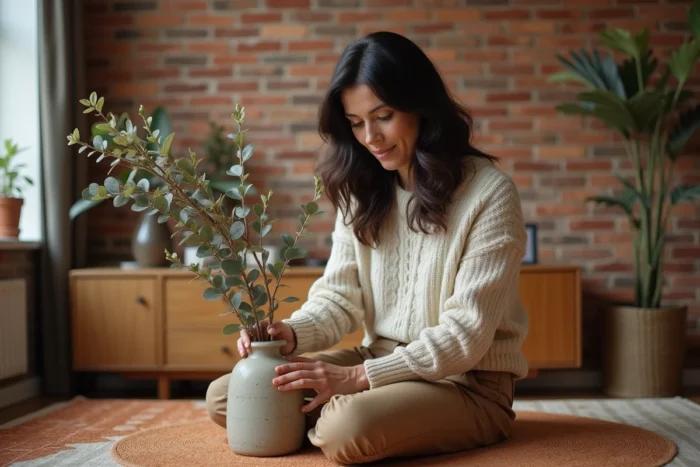
The warmth of a room is first experienced through touch and sight, long before the color of the walls comes into play. Natural materials like wood, linen, and stone create a sense of grounding that plastic or melamine cannot replicate. Solid wood for a table, a raw oak top for a shelf, washed linen for curtains: these elements bring visual irregularities that make a space feel alive.
The 2025-2026 trend confirms this direction. Interior design market reports indicate a rise in artisanal materials and imperfect finishes, in direct reaction to the cold minimalism that dominated the previous decade. We talk about “lived-in” interiors, where objects tell a story.
Specifically, working with textures means layering different materials in the same space. A boucle fabric sofa placed on a jute rug, next to a raw wood coffee table and a corduroy cushion: each surface captures light differently. It is this tactile contrast that creates the feeling of warmth, not the quantity of decorative objects.
Specialized resources, such as the home section of La Règle du Je, regularly detail these material combinations suitable for different interior styles.
Warm color palette: going beyond default beige
The common reflex is to paint walls in off-white or light gray “to avoid mistakes.” The result is often a neutral space that lacks character. Warm neutrals (sand, cream, greige) offer a more enveloping alternative without the risk of monotony.
Pantone has designated the shade Mocha Mousse for 2025, a soft chocolate brown evoking coffee and cocoa. This choice reflects a documented shift towards indulgent and comforting palettes. Earthy tones (terracotta, clay, warm brown) are gradually replacing cold grays in contemporary interiors.
Applying these colors requires a method. An accent wall in a strong hue works better than four walls painted in the same dark shade, which risks visually shrinking the room. The practical rule:
- A dominant tone on large surfaces (main walls, floor): warm neutral, light, serving as a backdrop
- A secondary tone on main furniture and heavy textiles (sofa, curtains): a deeper shade in the same color family
- An accent tone in occasional touches (cushions, vase, frame): the most pronounced color, used sparingly
Three levels of color are enough to visually structure a room. Adding a fourth or fifth shade creates confusion, not richness.
Decoration and furniture arrangement: creating zones without partitioning
A living room where all the furniture is pushed against the walls resembles a waiting room. Pulling the sofa away from the wall, even by a few dozen centimeters, immediately transforms the dynamics of the room. Furniture becomes a zoning tool.
In an open living space (living-dining room, open kitchen), the placement of furniture delineates functions without walls or partitions. A low sideboard can visually separate the dining area from the relaxation corner. A rug under the sofa and coffee table defines a distinct living area from the rest of the room.
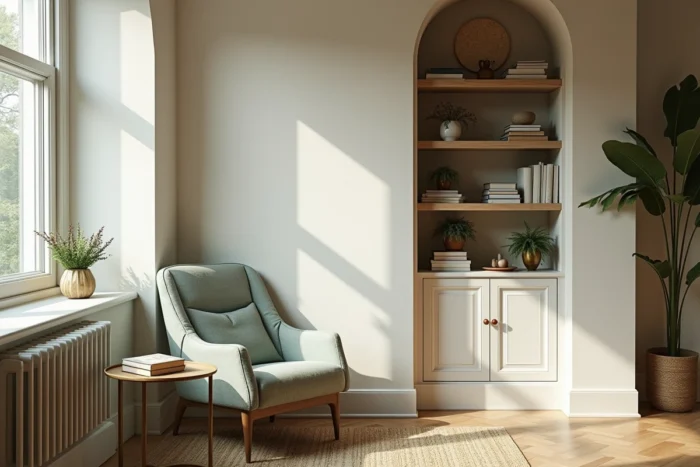
The common pitfall is overloading. Each piece of furniture should have a clear functional or aesthetic reason for being. A console in the entry serves as a catch-all and decorative surface. An accent chair near the window creates a reading nook. If a piece of furniture does not fulfill either of these roles, it clutters more than it contributes.
Layered lighting: the most underestimated lever
Lighting radically transforms the ambiance of a room, more than any decorative object. A single ceiling light casts flat light that flattens the volumes. Layering three light sources (soft general lighting, reading or accent lamps, and decorative light points) allows for modulation of the atmosphere according to the time of day.
Dimmable lamps offer valuable flexibility. Soft lighting in the evening, brighter lighting for work or reading: this variation creates the sensation that the room “lives” rather than simply being illuminated.
Personal style versus decor trends: finding your own balance
The 2026 trends published by RE/MAX Québec confirm a decline of pure minimalism in favor of spaces filled with personality, with a bold mix of styles and an accumulation of meaningful objects. This direction has the merit of freeing decorative choices, but it carries a risk: aesthetic chaos.
The key lies in the coherence of materials rather than the coherence of style. A vintage 1970s armchair, a contemporary designer lamp, and an antique farmhouse table can coexist if the materials communicate with each other: wood, patinated metal, natural fabric.
- Maintain a material thread (two or three recurring materials in the room) rather than a temporal thread
- Limit purely aesthetic decorative elements to a few strong pieces rather than multiplying small objects
- Accept that some spaces remain empty: a bare wall next to a busy wall creates visual rhythm
An interior that truly reflects the people living in it does not resemble any catalog. Items brought back from travels, second-hand furniture, inherited objects bring a dimension that new, coordinated furniture cannot replicate. The warmth of a space comes as much from these personal traces as from choices of colors or materials.
The last point to keep in mind: transforming an interior does not need to be simultaneous. Changing the lighting of a room, altering the textile palette, or simply rearranging existing furniture produces visible results without a significant budget. The most successful spaces are built in successive layers, not through a single purchase.