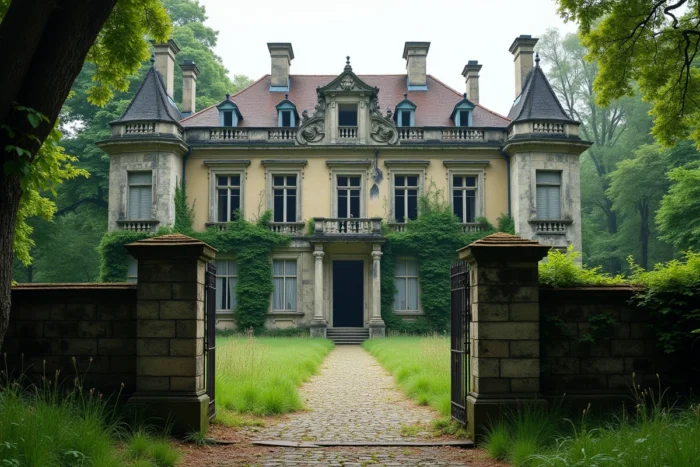
Acquiring an abandoned castle for a symbolic euro involves much more than the displayed price. Behind the transfer, there are legal constraints, renovation budgets in the six figures, and administrative deadlines that few buyers anticipate. Understanding these mechanisms before signing helps avoid turning a heritage project into a financial black hole.
Manifest Abandonment Procedure: the Legal Lock Before Any Transfer at 1 Euro
Municipalities cannot transfer an abandoned castle on a whim. Most now go through the manifest abandonment procedure, governed by the General Code of Local Authorities. This step requires the town hall to conduct a land study, identify the owner or their heirs, and then obtain a resolution from the municipal council.
In practice, we are talking about several months (sometimes several years) between the declaration of abandonment and the sale at a symbolic price. This delay protects the municipality against challenges from former owners or heirs who reappear after the transfer.
For prospective buyers, this guide on castles at 1 euro details the checks to be made on the buyer’s side before committing to this type of project. The absence of this procedure in the sales file is a direct warning signal: if the municipality has not secured the chain of ownership, the risk of litigation falls on the buyer.
Finding an Abandoned Castle for Sale: Channels to Know Beyond Traditional Portals

Traditional real estate portals rarely display true transfers at one euro. These programs go through discreet channels that public listings do not cover.
- Regional Public Land Establishments (EPF) buy abandoned properties on behalf of local authorities and put them back on the local market, often without national dissemination.
- Regional press (departmental newspapers, municipal bulletins) publishes transfer notices well before online platforms. Monitoring legal announcements in the targeted department remains the most effective reflex.
- Domain auctions allow for the acquisition of properties seized or abandoned by the state, sometimes at very low prices. The schedule is available on the domain sales portal.
- Local heritage preservation associations are often informed in advance of transfer projects and can direct inquiries to the relevant town hall.
The process requires time and travel. One does not find a castle for one euro by scrolling from their couch.
Renovation Budget for a Ruined Castle: Items Not Covered by the Symbolic Euro
The purchase price is anecdotal. The real budget starts the day after signing. For an abandoned castle, the waterproofing works (roofing, framework, structural masonry) take up the largest part of the budget, and quotes vary greatly depending on the condition of the building and the region.
A structural diagnosis conducted by a heritage architect (mandatory for classified or listed buildings) often reveals surprises: dry rot in the woodwork, foundations weakened by decades of neglect, non-existent sanitation networks.

On the artisan side, finding qualified professionals in heritage restoration takes time, especially in rural areas. Order books are often full, and traditional techniques (stone cutting, solid wood framing) cost much more than standard renovations.
Feedback varies on this point, but most buyers also underestimate additional costs: sometimes high property taxes on large parcels, specific insurance for buildings under renovation, and the cost of securing the site during the construction period.
Clauses and Commitments Imposed by Municipalities: What the Sales Agreement Really Contains
A transfer for one euro is never free of obligations. Municipalities systematically include resolutory clauses in the sales deed. In case of non-compliance, the municipality reclaims the property.
The most common commitments include:
- A precise work schedule, with renovation milestones to be respected under penalty of the castle being reclaimed by the community.
- A requirement for residence or public opening for a defined period (often several years).
- The prohibition of resale for speculative purposes during a given period, to prevent the buyer from reselling the renovated property at a high price without having fulfilled their part of the contract.
Having these clauses reviewed by a notary specialized in heritage law is the only way to gauge the true extent of the commitment. A general notary may overlook subtleties related to the classification of the building or historical easements.
Scams and False Listings for Castles at 1 Euro: Signals to Spot
The market also attracts fraudulent listings. Classified ad platforms publish offers for castles at symbolic prices with no connection to a real municipal program. The seller asks for a “security deposit” or “processing fees” before any visit.
Some basic checks can filter out these scams. If the listing does not mention the specific municipality, if no contact with the town hall is possible, or if the seller refuses an on-site visit, it is a fake. Any legitimate transfer goes through a notarized deed and a municipal resolution that can be consulted.
Italian programs for houses at one euro have popularized the concept in Europe, but the operation differs in France. Here, the transfer is governed by the local authority, not by a private intermediary. A castle sold for one euro by a private individual without municipal framework is, at best, a disguised classic negotiation, at worst, a scam.
The project of acquiring an abandoned castle for one euro remains accessible as long as one accepts that the symbolic price only concerns the purchase deed. The bulk of the budget focuses on securing the legal file, renovating the building, and fulfilling commitments made to the municipality, often over several years.