Finding a reliable healthcare professional online relies on a simple reflex: checking that the practitioner is listed in an official directory. Since October 2024, the RPPS (shared directory of healthcare professionals) has become the unique reference identifier, following the absorption of professions still linked to the old ADELI directory. Any serious search begins with this number.
The RPPS, a unique identifier to verify a practitioner
The RPPS centralizes identity, diploma, and practice location data for each professional involved in the healthcare system. Before 2024, two systems coexisted: the RPPS for doctors, pharmacists, and midwives, and ADELI for nurses, physiotherapists, or psychologists. This duality complicated verification.
Now, a single number is sufficient. When a patient consults a practitioner’s profile on an online directory, the presence of the RPPS number guarantees that the diploma has been verified by the relevant professional order or regional health agency.
By cross-referencing this data with the professionals on Dr Hackney, it becomes possible to quickly identify a practitioner whose qualifications are verified, without having to search multiple sites.
Health Directory of the ANS: reliable data, concrete limits
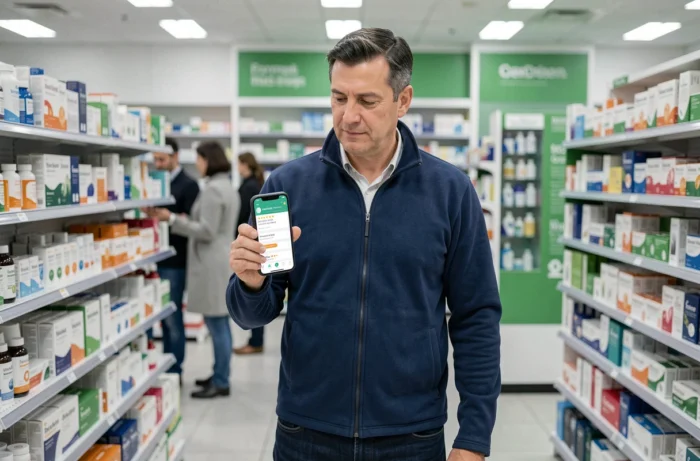
The Health Directory, managed by the Agency for Digital Health (ANS), is the public service reference for consulting information on professionals and care structures. Its data is updated daily from official sources (professional orders, ARS), which gives it significantly greater reliability than a traditional editorial directory.
Consultation is free and does not require an account. Searches can be conducted by name, profession, or practice location. Each profile displays the RPPS number, specialty, diplomas, and contact details of the practice.
This database, however, has a practical limit. The dataset published in 2026 no longer contains certain elements that existed in the old Ameli format, notably office hours and the rates for common procedures. A practitioner may therefore appear as “identified” without it being known if they are available, if they practice third-party payment, or if they accept new patients.
To obtain this information, it is often necessary to combine the Health Directory with other sources: the Ameli site, appointment booking platforms, or directly the practice’s secretariat.
Concrete criteria for assessing the reliability of an online directory
Not all health directories are created equal. Some aggregate outdated data, while others allow practitioners to self-declare without verification. To distinguish a reliable tool from a simple commercial directory, several points deserve systematic checking.
- The source of the data: a directory linked to the RPPS or the FINESS directory (for establishments) draws from databases controlled by health authorities, not from voluntary declarations
- The frequency of updates: daily or weekly updates limit the risk of encountering a retired practitioner or a practice that has moved months ago
- Transparency about the displayed information: does the profile indicate the RPPS number, the conventional sector, and the specific skills validated by a university diploma or an official title?
- The absence of undisclosed sponsored rankings: some directories place practitioners who pay a subscription at the top, without clear mention, which skews the search by geographical proximity
A directory that displays the RPPS number and cites its sources is more reliable than a site offering “patient reviews” without any traceability of professional data.
Teleconsultation and tele-expertise: finding a specialist remotely
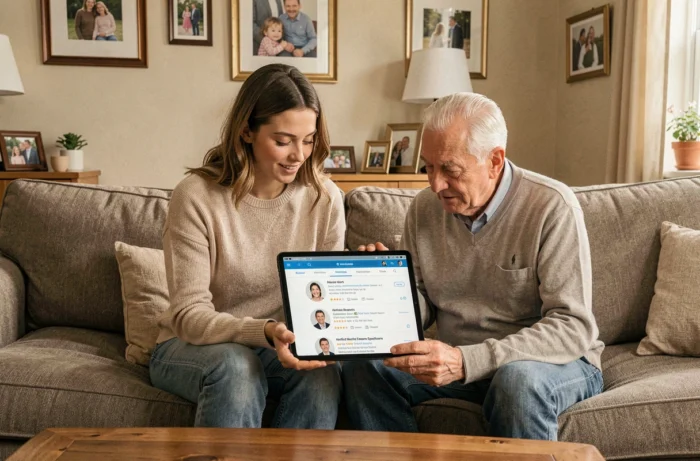
The search for a healthcare professional is no longer limited to the patient’s geographical area. Teleconsultation allows for consulting a doctor or specialist via video, significantly expanding the range of accessible practitioners, especially in areas where healthcare supply is insufficient.
Tele-expertise works differently: a doctor seeks the opinion of a specialist colleague without the patient needing to be present. This system speeds up complex diagnoses and avoids unnecessary travel.
To find a practitioner offering these services, appointment booking platforms now include a “video consultation” filter. The Health Directory, however, does not yet systematically specify whether a professional practices teleconsultation, which requires cross-referencing information.
Verifying a practitioner in teleconsultation
The fact that a doctor offers video consultation does not change the regulatory obligation: they must be registered with the RPPS and practice within the conventional framework. A practitioner not listed in official databases who offers teleconsultations should raise particular caution.
- Verify the RPPS number on the Health Directory of the ANS before any remote consultation
- Check that the platform used is an approved telemedicine tool, not just a public video conferencing service
- Ensure that the practitioner indeed practices the announced specialty (a general practitioner does not replace a specialist for a targeted opinion)
Remote medicine facilitates access to care, but the verification of qualifications remains the same as for an in-office consultation.
The RPPS, the Health Directory, and specialized platforms each cover part of the need. No single tool provides verified identity, availability, rates, and consultation modalities all at once. Cross-referencing two sources, at least one of which is official, remains the safest method to identify a reliable healthcare professional.