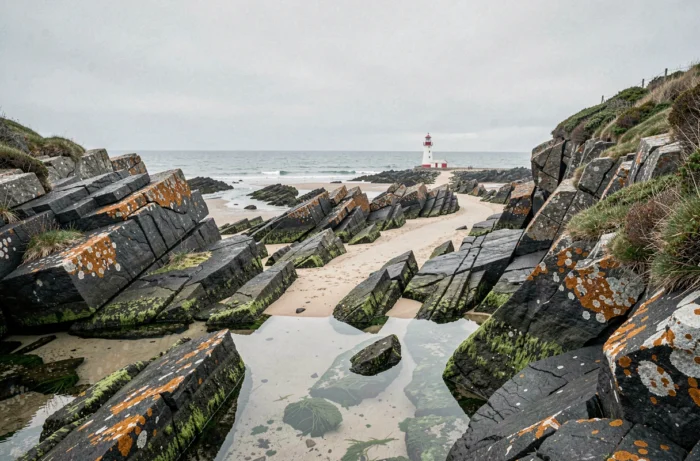
Brittany attracts a stable number of visitors each year, but the habits of those visitors are changing. Stays are getting shorter, bookings are made later, and spending is more controlled. This evolution, documented by the Brittany Tourism survey published at the end of August 2026, reshapes the way the region is discovered and explored.
Tourist pressure and housing on the Breton coast
Travel guides readily list the peaks, capes, and islands. They rarely mention the tension this attractiveness creates on the territory. In the coastal municipalities of Brittany, tourist pressure poses a concrete problem of permanent housing.
The issue is simple: when seasonal rentals multiply, local workers struggle to find a year-round roof over their heads. NHU Brittany posed the question directly in August 2026: can Brittany remain desirable and affordable at the same time? Feedback from the field varies on this point depending on the sectors, but the underlying trend is documented.
This is not an abstract problem. It affects the ability of restaurants, water sports centers, and accommodations to recruit staff during the season. A coastline where no one can live year-round ultimately loses what defines its identity: residents, shops open off-season, and local life. Brittany Region also gathers resources on territorial dynamics that go beyond just the tourist lens.
Cycling tourism in Brittany: a growing practice
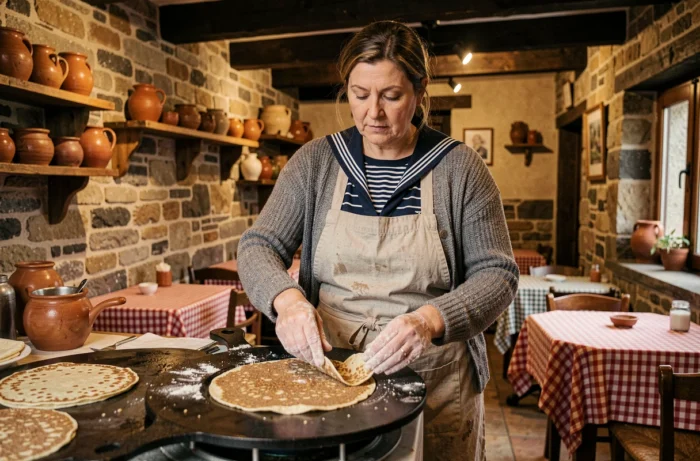
Biking is no longer a niche activity reserved for Lycra-clad athletes. Cycling tourism is significantly growing in Brittany, driven by the development of greenways and marked routes. The region has a network of paths that runs along the coast, traverses inland forests, and connects towns where one can stop for a complete crepe.
The Brittany Region has enhanced the TER offer, particularly around Rennes and in the south, with active consideration of the train-bike combination. The idea is to allow visitors to arrive without a car, load a bike onto the train, and then explore at their own pace.
This approach changes the type of heritage one discovers. By bike, one does not settle for just the major sites. One passes by isolated chapels, votive fountains, and calvaries that car circuits ignore. The Breton religious heritage, particularly dense in Finistère and Morbihan, reveals itself better at this pace.
Limitations to know before setting off
Heat waves, even in Brittany, complicate outdoor activities some summers. The available data does not allow for a conclusion about a uniform trend, but professionals report days when hiking and biking become uncomfortable, including on the north coast.
- The network of greenways is uneven across departments: Morbihan and Côtes-d’Armor have well-maintained routes, while other areas remain fragmented.
- The train-bike combination mainly works on major routes. Secondary lines do not all offer sufficient bike spaces.
- Accommodations suited for cyclists (secure storage, repair kits, direct access to routes) are not yet widespread.
Breton heritage and landscapes off the beaten path
The most well-known coastal routes, from GR34 to the points of Finistère, are experiencing accelerated erosion of the coastline. Some trails have already been relocated or temporarily closed. This phenomenon also affects portions of the customs officers’ path.
Breton islands are shrinking, quite literally. This geological reality is gradually transforming access to certain sites and forcing local authorities to rethink visitor flows.
Inland Brittany remains largely under-visited. Lake Guerlédan, the forests of Brocéliande and Huelgoat, and the parish enclosures of Léon offer a density of heritage comparable to the coast, without the summer saturation.
Gastronomy and lifestyle as a common thread
Breton gastronomy goes beyond the crepe-cider duo. The oysters from Cancale exemplify this richness: each Breton terroir has its own specialties, linked to the soil, climate, and local history.
Contemporary art is also finding its place. Artist residencies are multiplying in the old industrial buildings along the coast, and several small towns of character blend architectural heritage with temporary exhibitions. Morbihan and Finistère concentrate a cultural offer that expands year by year.
Off-season stays in Brittany: a choice that changes the experience
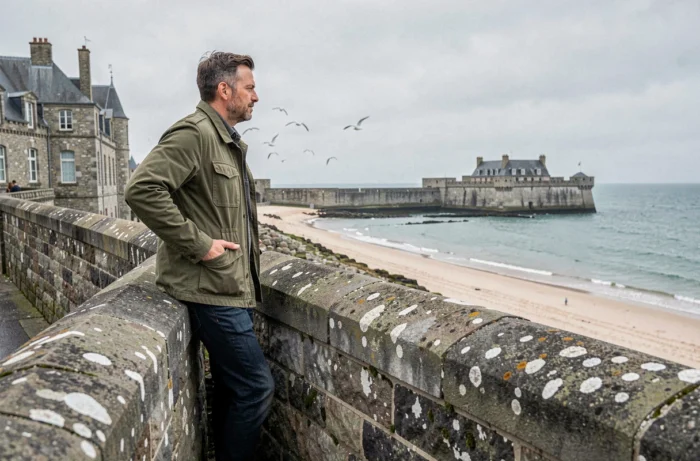
The trend toward last-minute bookings and shorter stays, identified by Brittany Tourism, has a positive side effect: off-season stays are becoming more attractive. September, October, and even April offer radically different visiting conditions compared to July-August.
The beaches are accessible without crowds. The coastal paths regain their tranquility. Accommodation prices drop significantly. Restaurateurs, less rushed by service, take the time to explain what they serve.
- Fest-noz and local festivals are spread throughout the year, not just in summer. Breton autumn has its own cultural calendar.
- The light of the late season transforms the coastal landscapes into a spectacle that the peak season does not allow one to see.
- Hiking on the GR34 in October avoids constant encounters with other walkers and allows for better observation of coastal wildlife.
Brittany is rich in heritage, landscapes, and reasons to return. The question now is about the balance between tourist attractiveness and the territory’s capacity to absorb its visitors without losing its essence. Visitor numbers remain stable, but the pressure is shifting geographically and seasonally, forcing each local destination to rethink its model.